Professor of Pediatric Rheumatology, Karolinska Institutet
Inflammation is not only controlled by the immune system. It is also regulated by the brain.
How your brain actively keeps inflammation under control.
The inflammatory reflex is the body’s built-in control system that allows the brain to continuously monitor immune activity and prevent inflammation from becoming excessive or chronic. This fundamental discovery—made 26 years ago by Dr Kevin Tracey and his research team—changed how science understands inflammation.
Before this breakthrough, the immune system was believed to function independently of the nervous system. We now know that when this reflex is impaired, the body may lose its ability to properly switch inflammation off—allowing it to persist and cause harm.
A built-in communication loop between brain and immune system
The inflammatory reflex works much like other automatic control systems in the body, such as those regulating heart rate or breathing. It operates continuously through a simple but powerful feedback loop.
Step 1
How the body detects rising inflammation
Listening for early warning signals.
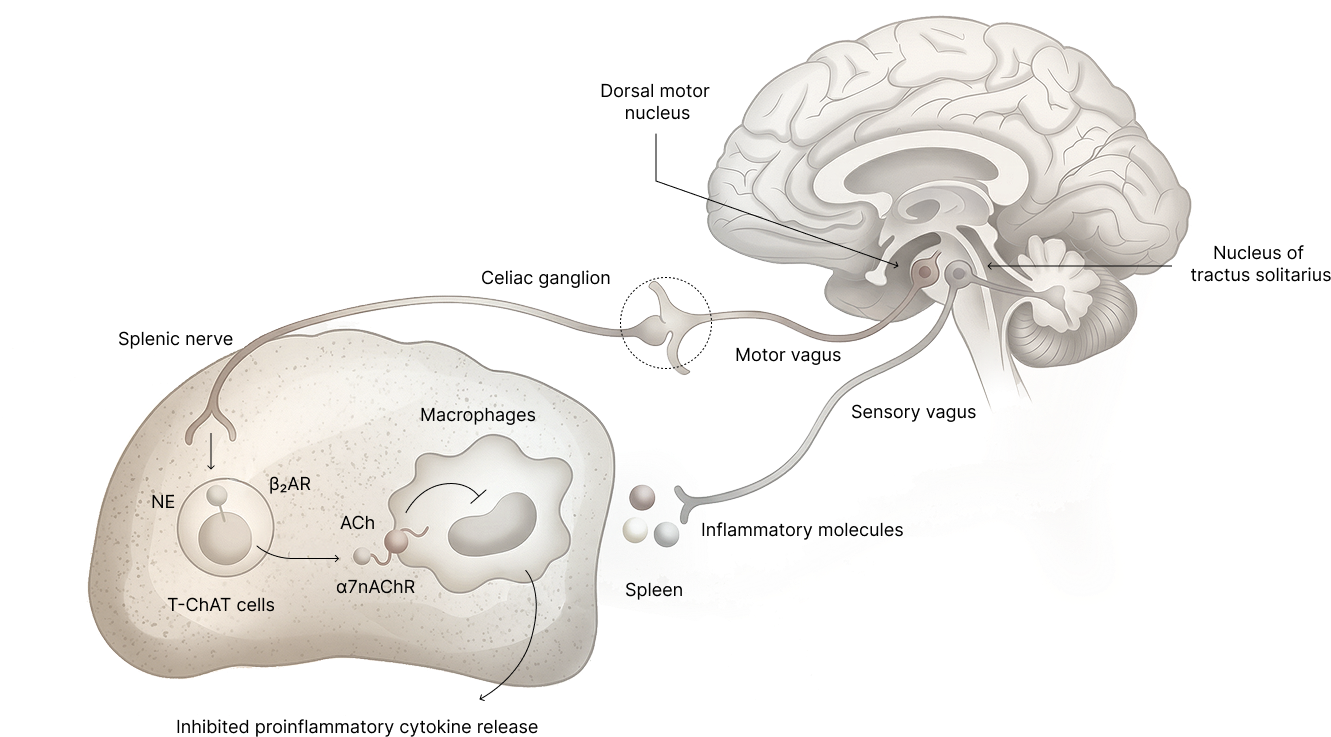
When inflammation increases, immune cells release signaling molecules such as cytokines. These molecules are detected by sensory fibers of the vagus nerve, which act as early warning sensors monitoring the body’s internal environment.
Step 2
How the brain decides what to do
Interpreting immune signals.
These sensory signals travel to the brainstem, where they are relayed to specific brain regions evaluating whether the immune response is helpful—or whether it has become excessive. This step allows the brain to determine when inflammation needs to be dampened.
Step 3
How inflammation is actively turned down
Applying the body’s own brake.
When inflammation needs to be reduced, the brain sends signals back through the vagus nerve. These signals trigger the release of acetylcholine, a neurotransmitter that binds to specific receptors on immune cells such as macrophages.
This interaction suppresses the release of pro-inflammatory molecules and helps restore immune balance.
Fig. The inflammatory reflex. Inflammatory molecules including cytokines activate sensory vagus fibers, sending signals to the nucleus tractus solitarius (NTS) in the brain stem. NTS–dorsal motor nucleus (DMN) interactions activate motor vagus output to the celiac ganglion and the splenic nerve. Splenic nerve-released norepinephrine (NE) stimulates β2-adrenergic receptors on T cells, triggering acetylcholine (ACh) release from ChAT+ T cells. Acetylcholine then activates α7 nicotinic receptors on macro-phages, suppressing inflammatory cytokine production. Mobile acetylcholine-producing T cells may exit the spleen into the bloodstream and migrate to inflammatory sites throughout the body.
Why this reflex is essential for long-term health
A well-functioning inflammatory reflex:
Prevents inflammation from spiraling out of control
Protects tissues from unnecessary damage
Helps maintain immune balance over time
When this regulatory system is disrupted, inflammation may persist even when there is no ongoing threat. This loss of control has been linked to conditions such as:
Sepsis
Rheumatoid arthritis
Inflammatory bowel disease
Chronic pain
Many additional chronic inflammatory disorders
From discovery to a new medical field
Why this changed how inflammation is treated
The discovery of the inflammatory reflex led directly to the development of vagus nerve stimulation (VNS) as a new therapeutic approach for inflammatory diseases.
Rather than blocking inflammation with drugs, VNS aims to support the body’s own regulatory circuitry. This idea forms a cornerstone of bioelectronic medicine—a field focused on restoring physiological balance by targeting neural circuits instead of chemical pathways.
In short
The body already knows how to control inflammation.
The inflammatory reflex is the body’s internal braking system for inflammation. It senses immune imbalance, engages the brain, and actively turns inflammation down—helping protect the body from chronic damage.
2. Andersson, U. & Tracey, K. J. Reflex principles of immunological homeostasis. Annual Review of Immunology 30, 313–335 (2012). https://doi.org/10.1146/annurev-immunol-020711-075015